

Higher Education in Transformation: Innovation, Teacher Training, and Artificial Intelligence
DOI:
https://doi.org/10.53382/issn.2810-7977.64Abstract
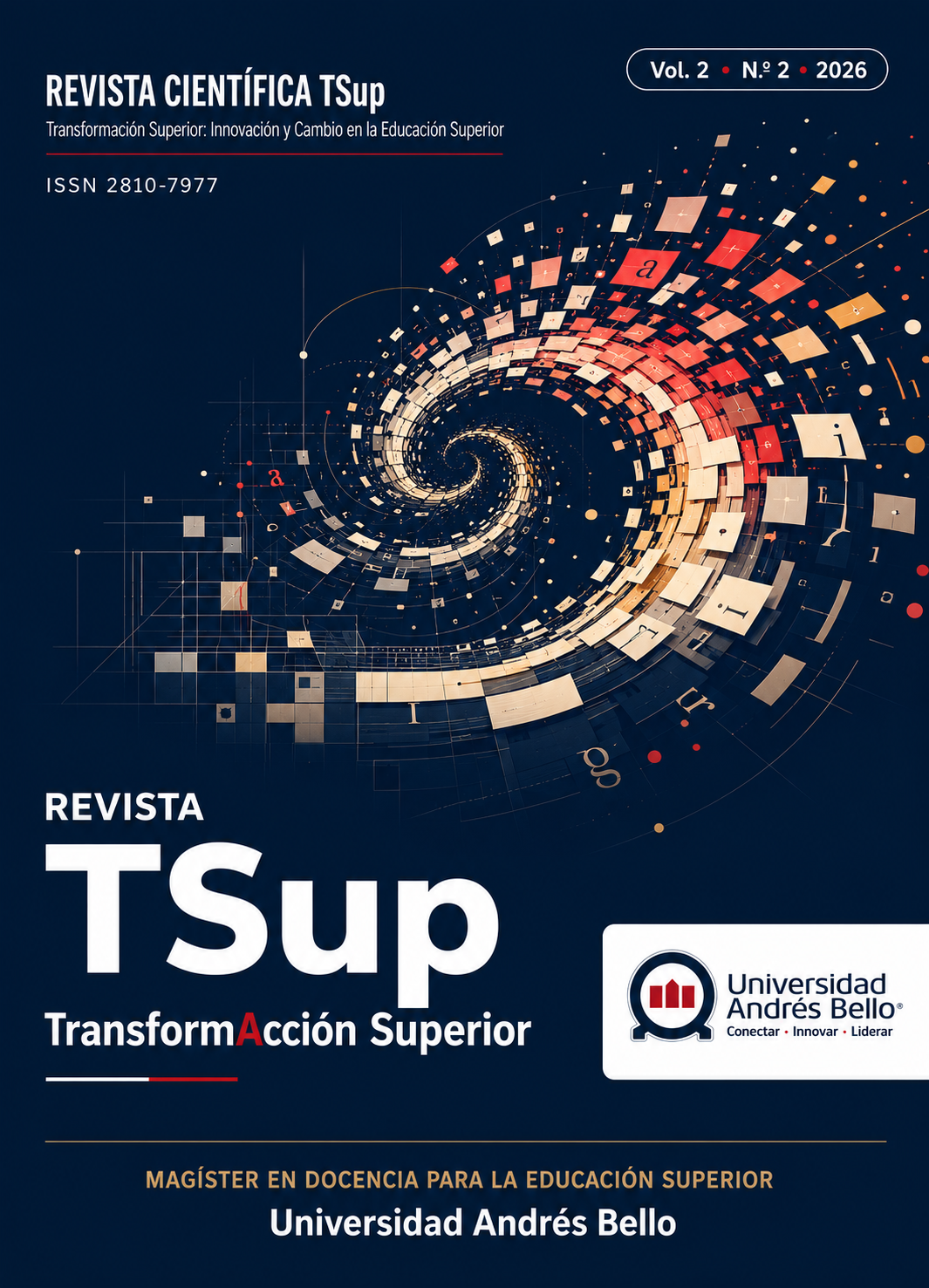
This editorial introduces the fourth issue of Transformación Superior (TSup), corresponding to the second issue of its second year of publication. The nine articles included in this issue address some of the major challenges currently facing higher education, including the critical and ethical integration of artificial intelligence, the strengthening of faculty members’ pedagogical and digital competencies, innovation in teaching and assessment methods, educational inclusion, and evidence-based decision-making. Drawing on different disciplines and institutional contexts, the contributions examine symbiotic cognition between educators and artificial intelligence, feminist critical reading, role-playing as a professional training strategy, student trajectories in degree-completion programs, faculty development in orthodontic specialties and virtual tutoring, academic integrity, professional decision-making, and the governance of artificial intelligence in Argentina and Chile. Taken together, the articles demonstrate that educational innovation involves more than the adoption of new technologies: it requires re-examining teaching practices, recognizing student diversity, and strengthening professional judgment, critical reflection, and ethical responsibility. This issue reaffirms TSup’s commitment to research, academic exchange, and the ongoing transformation of higher education.
Downloads
References
Downloads
Published
Issue
Section
License
Copyright (c) 2026 Revista TSup

This work is licensed under a Creative Commons Attribution-NonCommercial-ShareAlike 4.0 International License.
Authors who publish in this journal retain their copyright and, at the same time, grant the publication the right of first distribution of their work under the Creative Commons Attribution 4.0 International (CC BY 4.0) license. This license allows third parties to share, copy, redistribute, adapt, and reuse the content in any medium or format, even for commercial purposes, provided that the original authorship is properly acknowledged, the source of publication is indicated, and any modifications made are noted.